
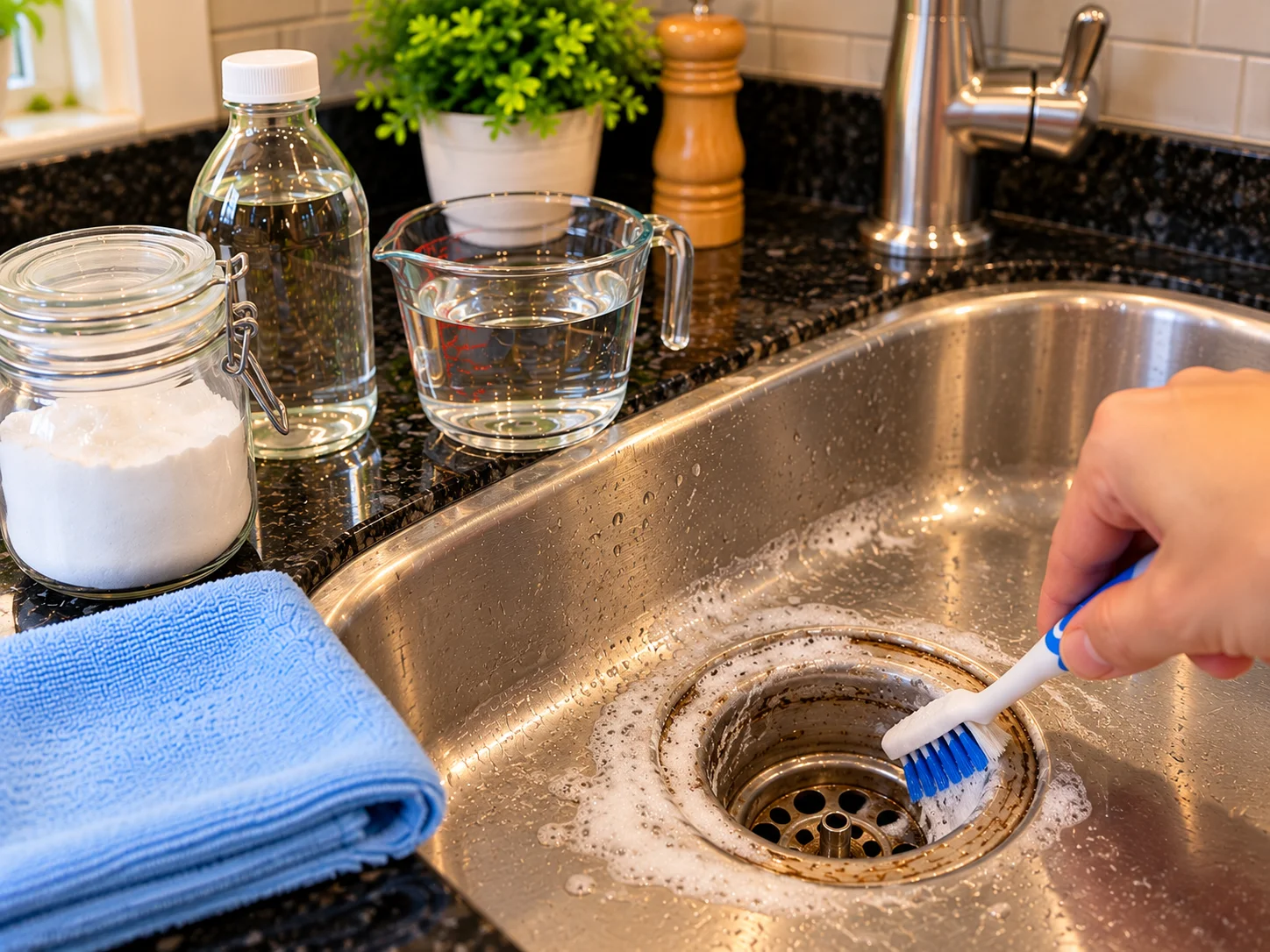

A dirty sink drain can start to smell, drain slowly, or collect a layer of grime around the opening. Fortunately, you can usually freshen it up with a few basic kitchen supplies and a simple cleaning routine.
What You’ll Need
- Baking soda
- White vinegar
- Hot water
- A small brush or old toothbrush
- A clean cloth
How to Clean a Dirty Sink Drain

1. Remove Visible Debris
Start by removing any food particles, hair, or other debris you can see around the drain opening. Wipe the area with a damp cloth.
If there is buildup around the drain, use an old toothbrush or small brush to loosen it.
2. Add Baking Soda
Pour baking soda into the drain. Try to get as much as possible around the inside of the drain opening rather than leaving it only on the surface.
Baking soda helps loosen grime and can also help with unpleasant drain odors.
3. Add White Vinegar
Pour white vinegar into the drain over the baking soda. The mixture will fizz as the two ingredients react.
Let it sit for several minutes so the bubbling action has time to work on the buildup.
4. Flush With Hot Water
Pour hot water down the drain to rinse away the loosened residue.
If your sink has a removable drain stopper, clean it separately before putting it back.
5. Wipe the Drain Opening
Finish by wiping the drain and surrounding sink area with a clean cloth. For stubborn residue, gently scrub it with the small brush again.
Common Mistakes to Avoid
Don’t rely on baking soda and vinegar to solve a serious blockage. If the sink is completely clogged or water is backing up, the problem may require a plunger, drain-cleaning tool, or professional attention.
Also, never mix bleach with vinegar or other incompatible cleaning products. Mixing cleaners can create dangerous fumes.
How to Keep the Drain Cleaner
A little routine maintenance can prevent buildup from becoming a bigger problem. Remove food debris before it goes down the drain, wipe the drain opening regularly, and rinse it with hot water when needed.
If a drain repeatedly smells bad or drains slowly even after cleaning, there may be buildup deeper in the plumbing that needs more than a surface cleaning.