
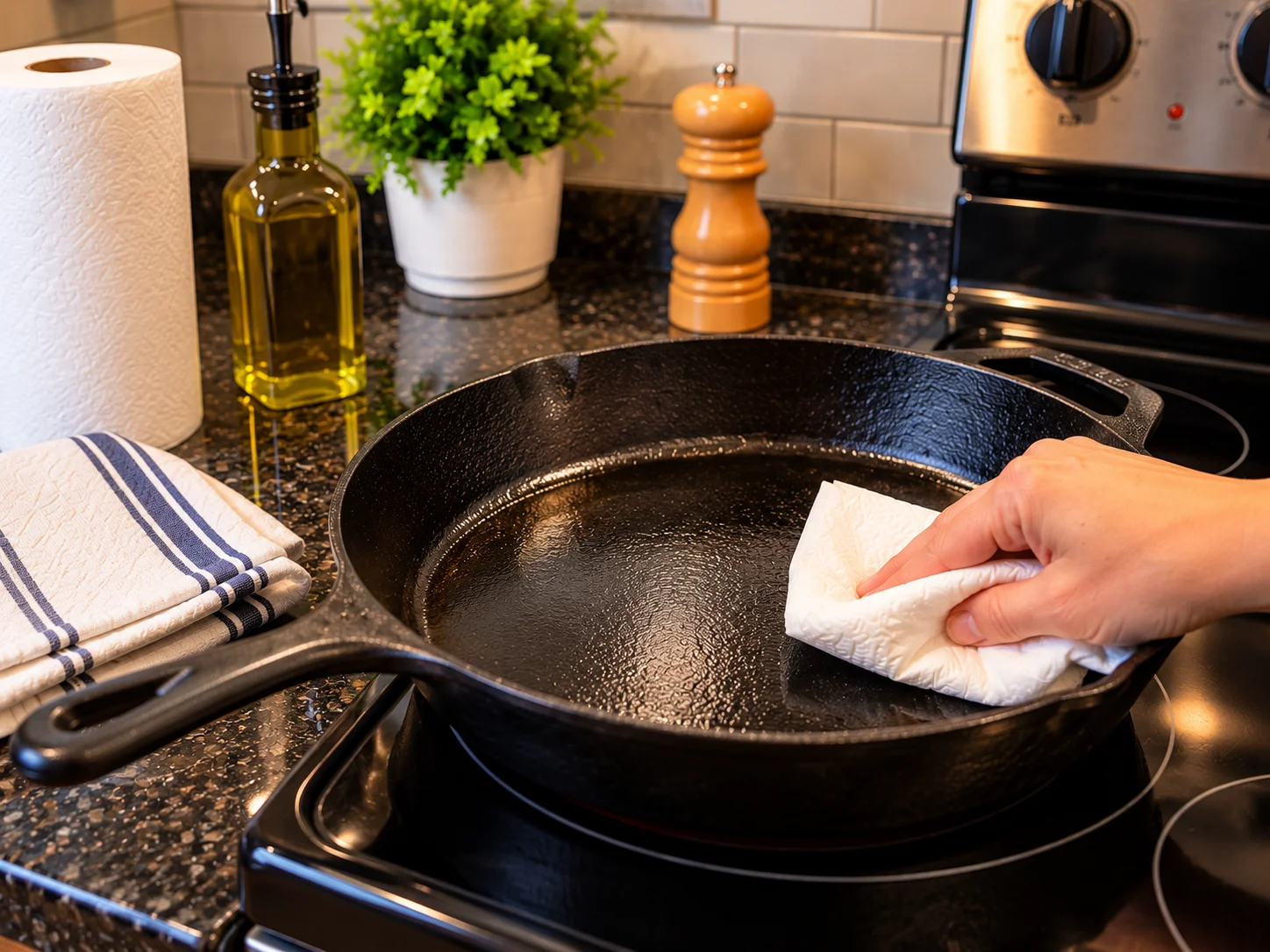

Drying a cast iron skillet properly is one of the easiest ways to prevent rust and keep the seasoning in good condition. After washing, remove as much moisture as possible, then warm the skillet briefly to evaporate any water left behind.
What You’ll Need
- Clean cast iron skillet
- Clean kitchen towel or paper towel
- Stovetop
- A small amount of cooking oil
How to Dry a Cast Iron Skillet
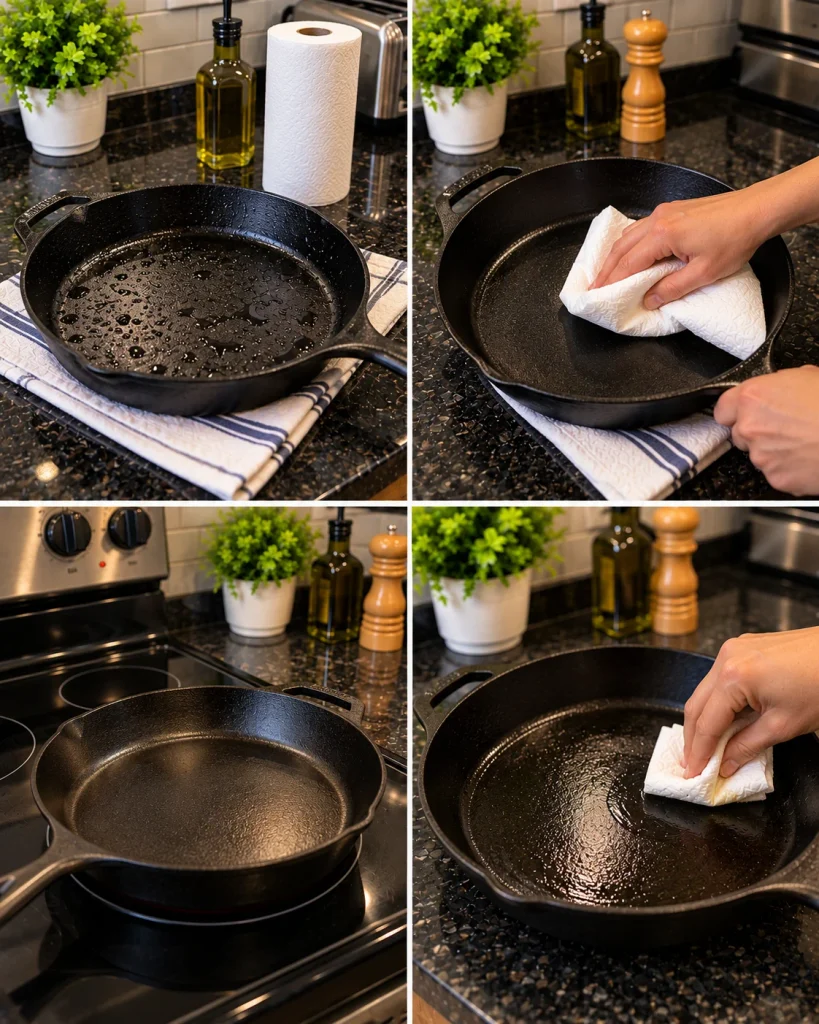
1. Wipe Out Excess Water
After washing the skillet, drain it well and wipe the inside and outside with a clean towel. Pay attention to the handle, sides, bottom, and any seams or edges where water can collect.
2. Heat the Skillet
Place the skillet on a stovetop burner over low to medium-low heat. Let it warm for a few minutes.
The gentle heat evaporates moisture that a towel may leave behind. You do not need to get the skillet extremely hot.
3. Check for Remaining Moisture
Once the skillet is warm and completely dry, turn off the burner. If you see any damp spots, carefully wipe them away with a clean towel.
Be careful when handling the skillet because the handle can become hot.
4. Apply a Thin Coat of Oil
For regular maintenance, add a small amount of cooking oil to the warm skillet. Spread it over the cooking surface and other bare cast iron surfaces with a paper towel or clean cloth.
The coating should be very thin. If the skillet looks wet or greasy rather than lightly coated, wipe away the excess.
5. Let It Cool
Allow the skillet to cool completely before storing it. Store it somewhere dry with the lid off, if it has one, so trapped moisture does not build up.
Why Drying Cast Iron Matters
Cast iron can rust when moisture remains on its surface. Simply leaving a freshly washed skillet on the counter to air-dry can allow water to sit on the metal longer than necessary.
Wiping it dry and briefly warming it provides an extra layer of protection. A thin coating of oil also helps maintain the skillet’s seasoned surface.
Common Mistakes to Avoid
Leaving the skillet wet: Even small amounts of standing water can encourage rust.
Using high heat to dry it: High heat isn’t necessary for drying and can make the skillet unnecessarily hot.
Applying too much oil: A heavy layer can leave the skillet sticky. Use just enough to create a thin coating.
Putting it away while damp: Make sure the entire skillet is dry before storage, including the underside and handle.
Frequently Asked Questions
Can you towel-dry cast iron?
Yes. Towel-drying removes most of the water, but briefly warming the skillet afterward helps evaporate moisture that remains on the surface.
Should you oil cast iron after drying?
A very thin coat of oil is useful for routine cast iron maintenance, particularly after washing. Wipe away excess oil so the surface is not sticky.
Can cast iron air-dry?
It can, but it’s better to dry it promptly rather than leaving moisture on the surface. Towel-drying followed by brief stovetop heating is a simple routine.
What if my cast iron skillet already has rust?
Drying alone will not remove existing rust. Rusty cast iron needs to be cleaned and re-seasoned before returning to normal use.
Final Tip
The simplest routine is: wash, towel-dry, warm briefly on the stove, then apply a very thin layer of oil. Making this a habit after cleaning helps keep your cast iron skillet dry, seasoned, and ready for its next use.