
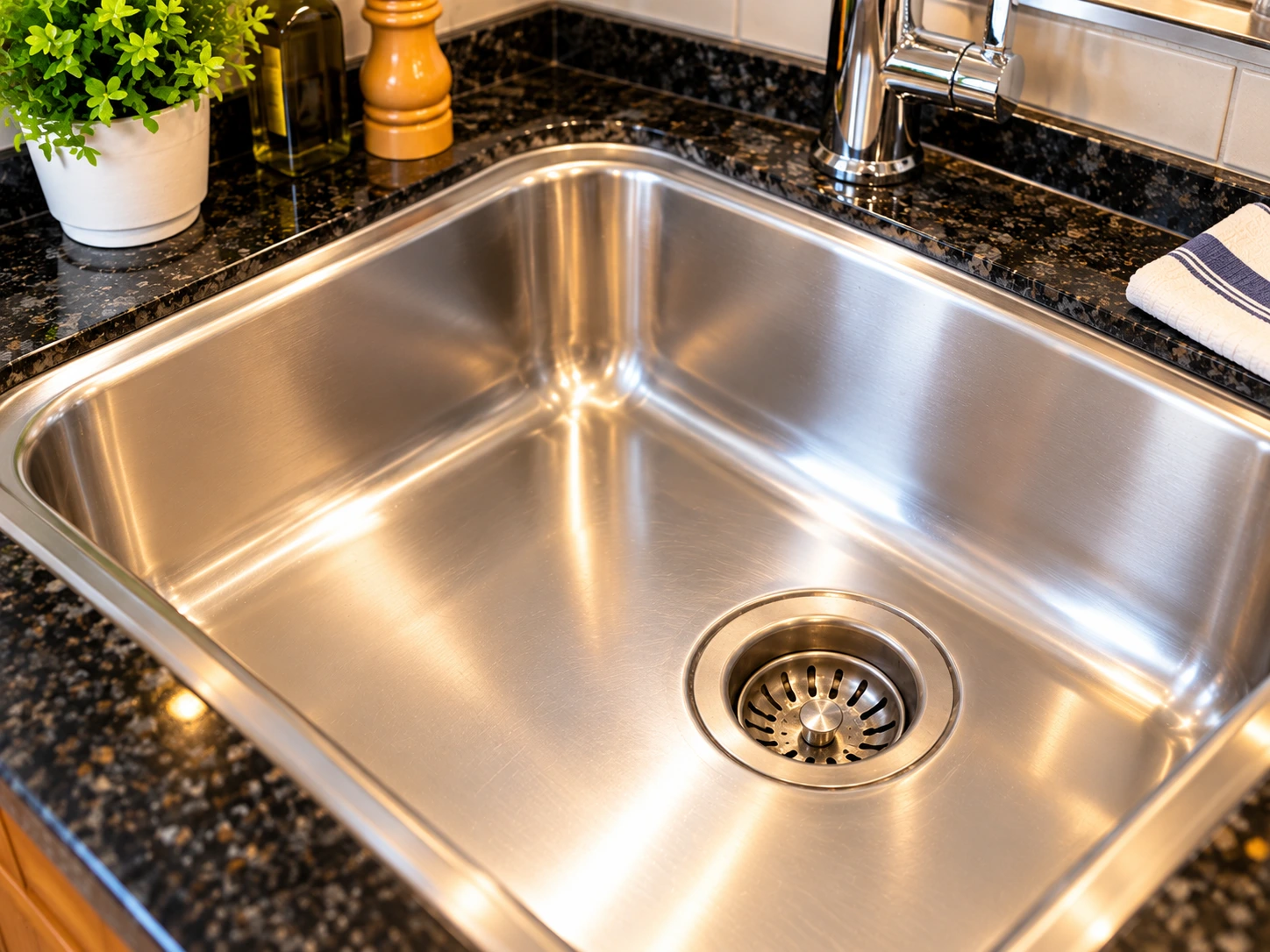

A dull stainless steel sink usually needs more than a quick rinse. Food residue, hard-water spots, grease, and fine scratches can leave the surface looking cloudy. The good news is that you can restore much of its shine with a gentle cleaning routine and the right technique.
What You’ll Need
- Dish soap
- Warm water
- Soft sponge or microfiber cloth
- Baking soda
- White vinegar
- Clean, dry microfiber cloth
How to Make a Stainless Steel Sink Shine Again
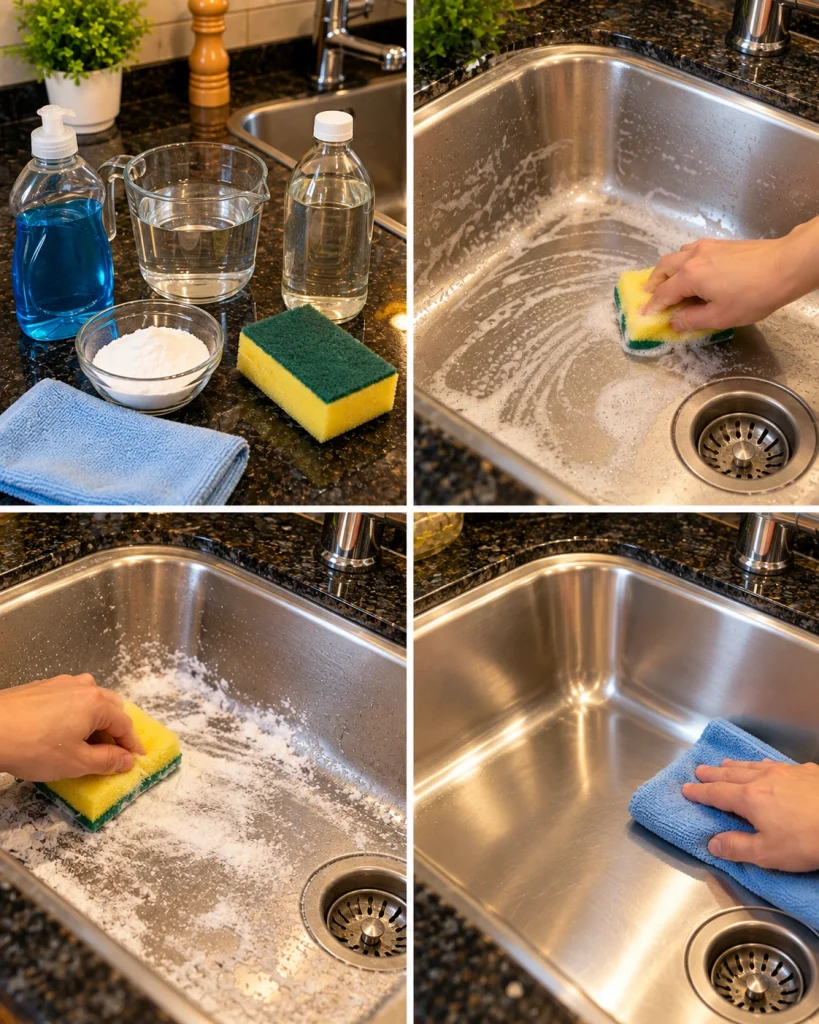
1. Clear and rinse the sink
Remove dishes, food scraps, and anything sitting in the basin. Rinse the sink with warm water to loosen surface residue.
2. Wash with dish soap
Add a small amount of dish soap to a soft, damp sponge. Clean the entire sink, working in the direction of the stainless steel’s grain rather than scrubbing in circles.
Rinse thoroughly so no soap film remains.
3. Tackle dull or stained areas with baking soda
For stubborn residue, sprinkle a light layer of baking soda over the damp surface. Gently rub with a soft sponge, following the grain of the steel.
Avoid aggressive scrubbing. Stainless steel can develop visible scratches if cleaned with abrasive materials or excessive pressure.
4. Use vinegar for water spots
For mineral deposits and water spots, dampen a microfiber cloth with white vinegar and wipe the affected areas. Let it sit briefly if needed, then rinse the sink well with water.
Never mix vinegar with bleach or other incompatible cleaning products.
5. Dry and buff the sink
This step makes a noticeable difference. Use a clean, dry microfiber cloth to remove all remaining moisture and buff the surface along the grain.
Leaving the sink wet can allow new water spots to form, especially in areas with hard water.
Why Does Stainless Steel Lose Its Shine?
Stainless steel can look dull when a thin layer of grease, soap residue, minerals, or food particles builds up on the surface. Water spots are especially noticeable because minerals can remain behind after the water evaporates.
Fine scratches can also affect the appearance. Cleaning can remove residue and restore the surface’s shine, but it cannot completely remove deeper scratches.
Common Mistakes to Avoid
- Scrubbing against the grain: This can make scratches more noticeable.
- Using steel wool: It can scratch stainless steel and leave behind particles that may contribute to rust spots.
- Using harsh abrasive cleaners: These can dull or scratch the finish.
- Leaving the sink wet: Drying after cleaning helps prevent water spots.
- Using too much cleaning product: Residue can leave the surface looking cloudy instead of shiny.
How to Keep a Stainless Steel Sink Shiny
For easier maintenance, rinse the sink after use and wipe away food residue rather than letting it dry on the surface. After cleaning, dry the sink with a microfiber cloth.
A quick wipe along the grain takes less time than trying to remove a heavy buildup later.
Frequently Asked Questions
Can baking soda scratch stainless steel?
Baking soda is relatively mild, but scrubbing aggressively can still damage some stainless steel finishes. Use a soft sponge and gentle pressure, and always follow the grain.
Does vinegar make stainless steel shiny?
Vinegar can help remove mineral deposits and water spots that make stainless steel look dull. Rinse the surface afterward and dry it thoroughly.
How often should I polish my stainless steel sink?
You do not need to polish it every time you clean it. Regular washing, rinsing, and drying are usually enough to keep the sink looking clean, while deeper cleaning can be done when buildup or water spots appear.